
Does Your Commercial Roof Membrane Need Repaired, Restored or Replaced?
One of the most common questions commercial property owners ask is, "How long should my roof membrane last?"
As commercial flat roofing contractors we know the answer depends on several factors, including the type of flat roofing system, weather exposure, drainage conditions, foot traffic, installation quality, and ongoing maintenance.
While many commercial roof membranes are designed to last 20 years or more, some begin experiencing problems much sooner. Others continue performing well beyond their expected lifespan.
The difference often comes down to how the roof is maintained and whether developing issues are identified before they create larger problems.
In this post we try explaining the signs to look for in order to identify when your commercial flat roof, or commercial roof membrane, is ready for a tune-up or commercial roof replacement.
What Causes Commercial Roof Membranes to Deteriorate?
Commercial roofing systems in Ohio (especially Central Ohio and Northeast Ohio) face constant exposure to the elements and year after year, the membrane is subjected to:
• Sunlight and UV exposure
• Rain and snow
• Freeze-thaw cycles
• High winds
• Temperature fluctuations
• Rooftop foot traffic
• HVAC maintenance activity
Over time, these conditions can gradually affect a commercial flat roof membrane's ability to protect the building and in many cases, the membrane itself is not the first thing to fail. Problems often begin around seams, penetrations, flashing details, drains, and rooftop equipment.
Warning Signs That a Roof Membrane May Be Wearing Out
A commercial roof doesn't need to be actively leaking to show signs of aging. During roof inspections, we frequently find conditions that indicate a membrane is approaching the point where repairs, restoration, or replacement should be evaluated. Here are 5 signs your commercial roof membrane may need a professional inspection and free analysis with recommendations.
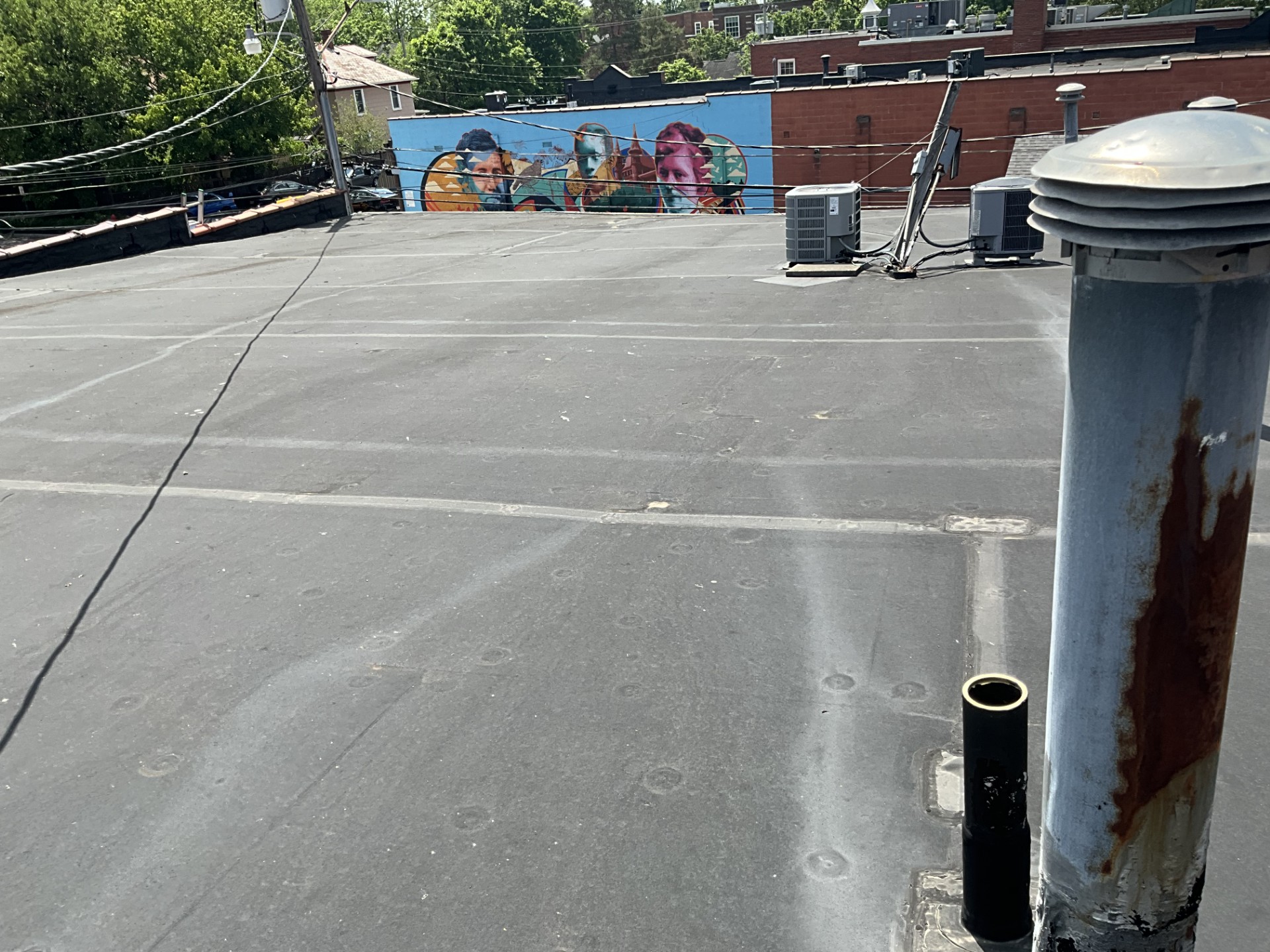
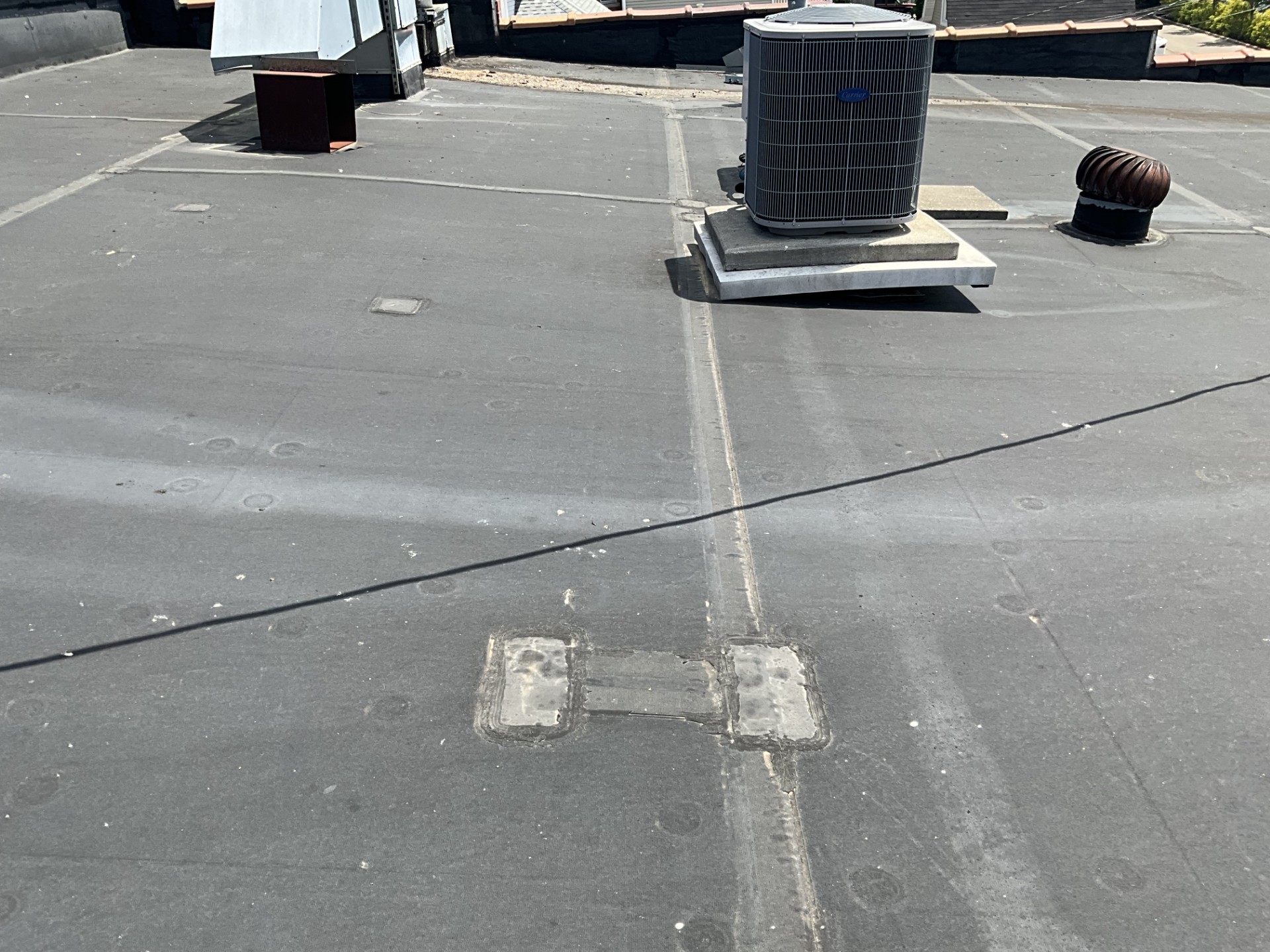
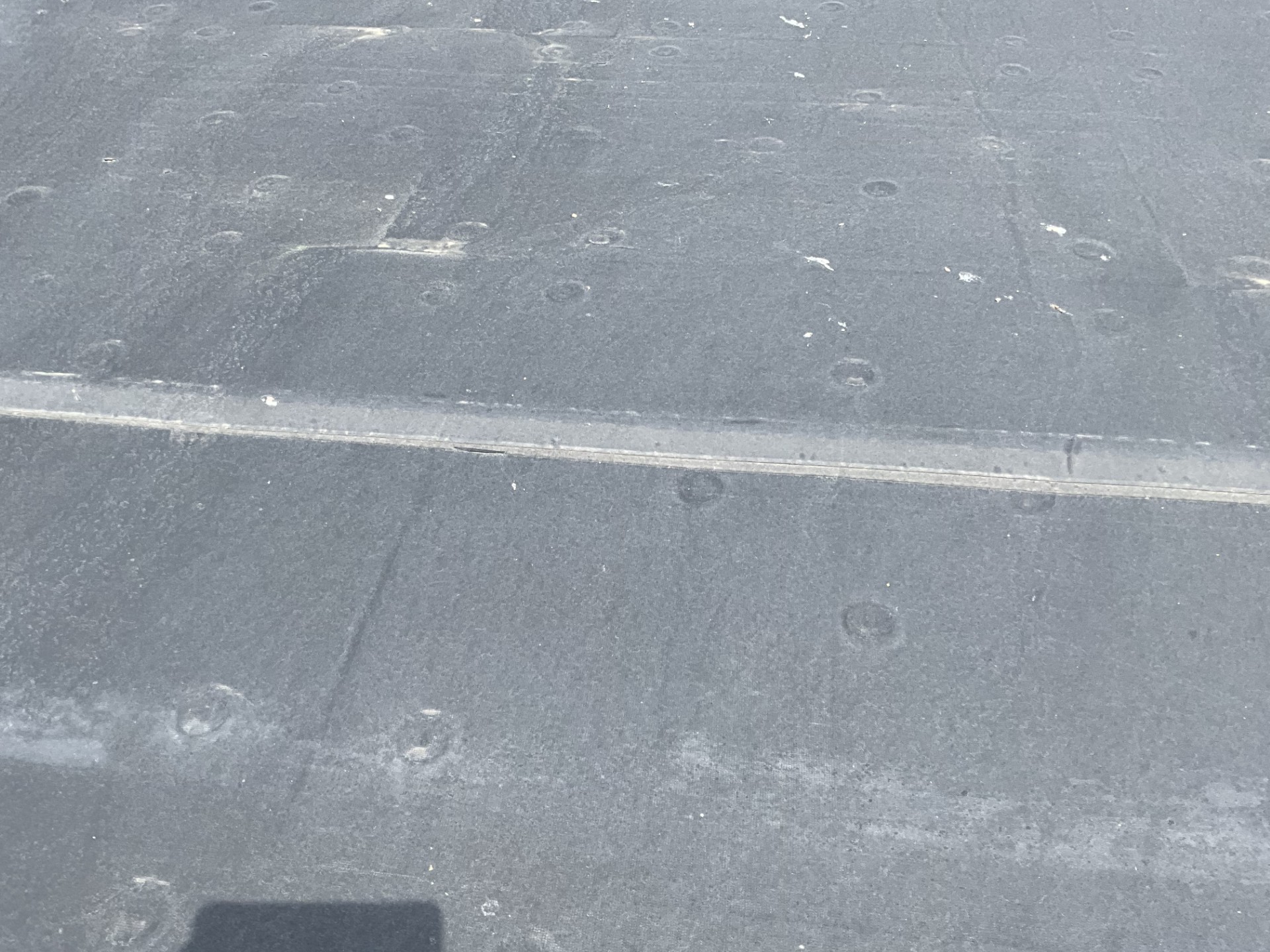
1. Surface Wear and Weathering
As membranes age, they can lose flexibility and show visible signs of wear. The roof may still be functioning, but aging materials become more vulnerable to future damage and water intrusion.
2. Deteriorating Seams
Roof seams experience constant expansion and contraction throughout the year, especially given Ohio's extreme weather fluctuations. As roofing systems age, seams can begin separating or weakening, creating potential pathways for water to enter the roofing assembly.
3. Rust Around Roof Penetrations
Rust staining around vent pipes, mechanical equipment, and other penetrations can indicate ongoing moisture exposure. These areas are among the most common locations for commercial roof leaks to develop. (Commercial Roof Inspection Reveals More Than Just a Leak)
4. Previous Repair Areas
A repair is not necessarily a bad sign. However, when a roof contains numerous patches or recurring repair locations, it may indicate the roofing system is reaching a stage where larger decisions need to be considered.
5. Pooling or Ponding Water (Standing Water)
Standing water is one of the most common contributors to premature membrane deterioration. The industry term is "ponding water" which refers to the accumulation of water in low spots 48 hours or more after a rain while "pooling water" is a more casual term customers use to explain any areas of water collecting in an area. In both cases, when water remains on a roof for extended periods, it can accelerate aging and increase stress on roofing materials.
Can a Commercial Roof Membrane Be Repaired?
In many situations, yes. One of the biggest misconceptions among building owners is that every roofing issue requires replacement. Many membrane roofs can continue providing years of service through:
• Seam repairs
• Flashing repairs
• Drainage improvements
• Preventative maintenance
• Roof restoration systems
The key is identifying issues before moisture spreads throughout the roofing assembly. (Commercial Roof Inspection Reveals More Than Just a Leak) This is one reason routine roof inspections are so valuable, and an integral part of our commercial roof maintenance programs. Early detection often provides building owners with more options and lower repair costs.
When Does Replacement Become Necessary?
Eventually, every roofing system reaches the point where replacement becomes the most practical long-term solution. Factors that may indicate replacement should be considered include:
• Widespread membrane deterioration
• Extensive moisture intrusion
• Saturated insulation
• Recurring leak issues
• Structural concerns
• Significant drainage problems
A professional inspection helps determine whether maintenance, targeted repairs, roof restoration, or replacement is the most practical solution based on the actual condition of the roofing system.
So, How Long Should a Commercial Roof Membrane Last?
There is no single answer to how long your roofing membrane should last. Some roofing systems experience significant deterioration in less than 15 years. Others continue performing well beyond 25 years.
The most important factor is not the age of the roof alone, but its condition.
A properly maintained roof membrane will almost always provide more value than a neglected roofing system of the same age. The roofs that achieve the longest "service lives" are typically those that receive regular inspections, prompt repairs, proper drainage maintenance, and restoration when appropriate.
If you're unsure about the condition of your commercial roof, a professional inspection by Key Roof Solutions can help determine how much life remains and what steps can be taken to maximize your investment.
Can a Commercial Roof Membrane Be Restored?
In some situations, a commercial roof restoration may be an option between repair and replacement.
Commercial roof restoration typically involves cleaning and preparing the existing roof surface, making necessary repairs, and applying a specialized roof coating designed to protect the membrane from further weathering and UV exposure. When the underlying roof system remains structurally sound, restoration can help extend the service life of the roof while improving waterproofing performance and reducing future maintenance concerns.
Roof restoration is not appropriate for every roofing system. Roofs with widespread moisture intrusion, saturated insulation, structural issues, or extensive deterioration often require more significant repairs or replacement. However, when conditions are right, restoration can provide building owners with a cost-effective alternative that extends roof life without the disruption of a complete tear-off.
A professional roof inspection can help determine whether your roof is a candidate for repair, restoration, or replacement. Many building owners are surprised to learn that aging roofs still have years of service life remaining when addressed before major problems develop. (What Happens During a Commercial Roof Maintenance Inspection?)
How Maintenance Helps Extend Roof Life
One of the best ways to maximize the lifespan of a commercial roof membrane is through routine maintenance. Regular inspections allow roofing professionals to identify developing concerns before they become expensive problems. At Key Roof Solutions our maintenance programs include:
• Roof inspections
• Drainage evaluations
• Flashing assessments
• Membrane condition reviews
• Documentation and reporting
• Minor preventative repairs
These services help property owners make informed decisions and reduce the likelihood of unexpected roofing emergencies. Many building owners spend thousands of dollars replacing roofing systems that may have been candidates for repair or restoration had developing issues been identified sooner. A proactive maintenance program helps create a long-term plan for the roof and provides the information needed to make smart financial decisions about the building.
Schedule a Commercial Roof Inspection
 At Key Roof Solutions, we help commercial property owners evaluate the condition of their roofing systems through detailed inspections, preventative maintenance programs, repairs, restorations, and replacement services.
Our philosophy is simple: maintain what can be maintained, repair what can be repaired, restore what can be restored, and only recommend replacement when it is truly the best long-term solution.
If your roof membrane is aging or you're unsure about its condition, now is a great time to schedule a professional evaluation and develop a plan for the years ahead.
Commercial Roofing Services


